Countertops define the look of a kitchen and take more daily wear than almost any other surface in the home. For most homeowners in North Atlanta, the choice comes down to two materials. The quartz vs granite countertops decision appears in nearly every kitchen remodel we plan.
Both are excellent options. Each has strengths that suit different households, styles and budgets. This guide compares them side by side so you can choose with confidence.
What is quartz?
Quartz countertops are engineered surfaces. Manufacturers combine ground natural quartz with resins and pigments, then press the mixture into slabs. The result is a hard, non-porous material with consistent color and pattern.
Because quartz is manufactured, it comes in a wide range of colors, from solid whites to designs that imitate marble veining.
What is granite?
Granite is a natural stone quarried from the earth. Each slab is cut, polished and finished. No two slabs are identical, so every granite countertop is unique.
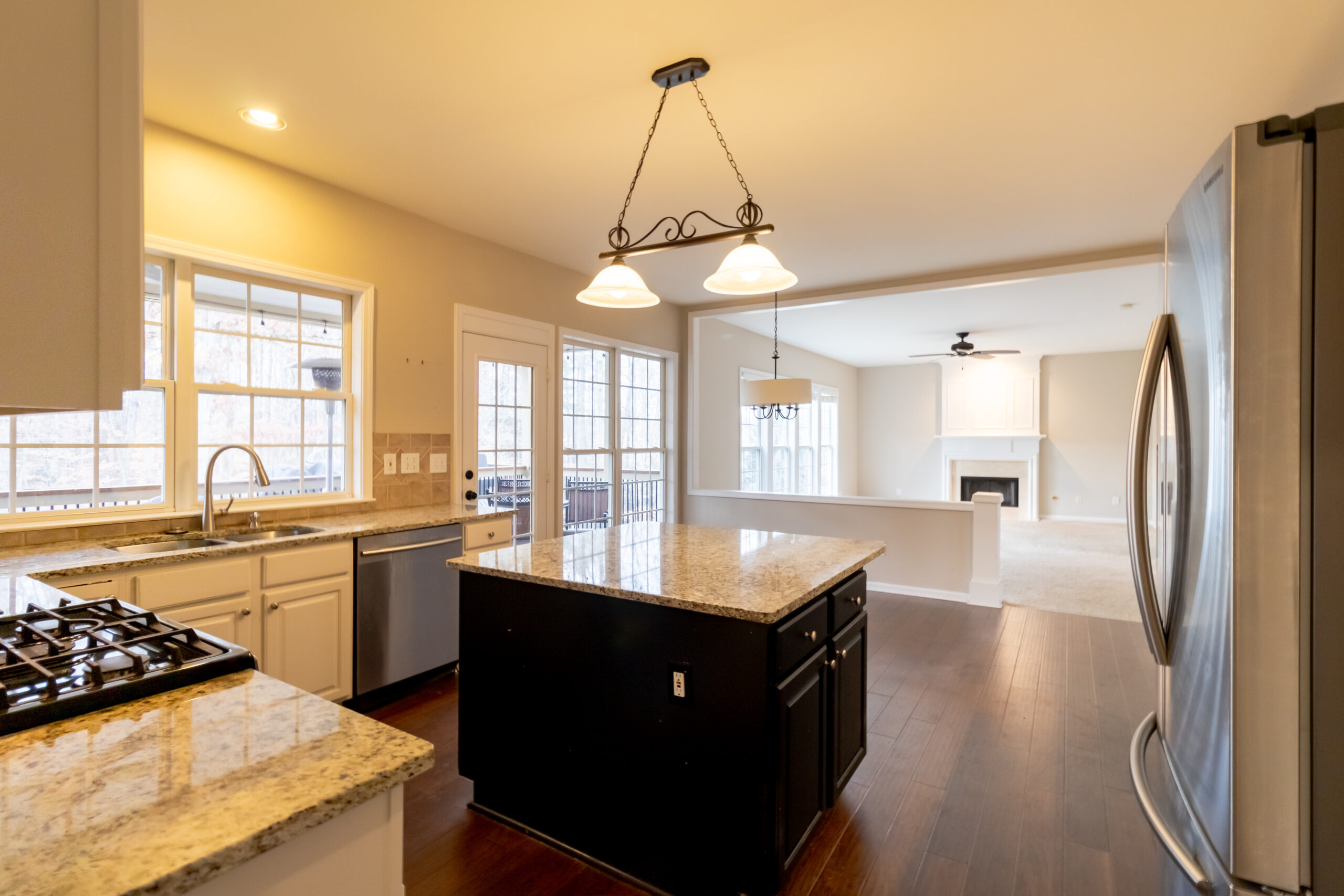
Granite comes in many colors and patterns, from subtle speckles to bold movement. Its natural variation is the main reason many homeowners choose it.
Quartz vs granite countertops: side-by-side comparison
| Feature | Quartz | Granite |
| Origin | Engineered | Natural stone |
| Appearance | Consistent color and pattern | Unique natural variation |
| Porosity | Non-porous | Porous, needs sealing |
| Maintenance | Very low | Low, with periodic sealing |
| Heat resistance | Good, but resins can be damaged by direct high heat | Very good |
| Stain resistance | Excellent | Good when sealed |
| UV exposure | Can discolor in direct sunlight outdoors | Stable outdoors |
| Seams | Easier to match | Harder to match due to variation |
Now let’s look at each factor in more detail.
Durability: quartz vs granite countertops
Both materials are very hard and resist scratches in normal kitchen use. Granite is a natural stone formed under extreme pressure. Quartz is mostly ground quartz, one of the hardest minerals.
In daily use, the difference is small. Both handle cutting, cooking and busy family kitchens well. However, neither should be used as a cutting board, because knives can dull and very hard impacts can chip edges.
Maintenance
Maintenance is where quartz has a clear advantage.
Quartz maintenance
Quartz is non-porous, so liquids do not penetrate the surface. It never needs sealing. Daily cleaning with mild soap and water is enough. This makes quartz a favorite for busy families and anyone who wants a low-maintenance kitchen.
Granite maintenance
Granite is porous to some degree. Most slabs need sealing at installation and periodically afterward to resist stains. Sealing is simple, but it is a task you need to remember. Some dense granites need sealing less often than others.
Heat resistance
Granite handles heat very well because it is a natural stone. Setting a hot pan on granite is unlikely to cause damage, although trivets are still recommended.
Quartz contains resins that can be damaged by direct, intense heat. A hot pan placed directly on quartz may cause discoloration or cracking. Using trivets protects the surface.
If you cook often and like to set pans down quickly, granite may suit your habits better.
Stain resistance
Quartz resists stains from coffee, wine, oil and citrus because liquids stay on the surface. Granite resists stains well when properly sealed. Without sealing, oils and dark liquids can leave marks.
Appearance and style
The look of quartz
Quartz offers consistency. If you want a clean white kitchen or a uniform look across a long island, quartz delivers it. Many quartz designs imitate marble veining without marble’s maintenance needs. Seams are easier to blend because slabs match closely.
The look of granite
Granite offers individuality. Each slab has its own movement, color and depth. Many homeowners enjoy choosing their exact slab at a stone yard. Granite works especially well in traditional and transitional kitchens.
In our North Atlanta projects, quartz is currently the most requested material, especially in white and light gray tones. Granite remains popular with homeowners who want a natural, one-of-a-kind look.
Cost factors
The quartz vs granite countertops comparison on price depends more on the specific product than on the material type. Entry-level granite can cost less than premium quartz, and exotic granite can cost more than most quartz.
Total countertop cost depends on:
- Square footage. Larger kitchens and islands use more material.
- Slab grade. Premium colors and patterns cost more.
- Edge profile. Decorative edges add fabrication time.
- Cutouts. Sinks, cooktops and outlets each require cutting.
- Waterfall edges. Continuing the countertop down the side of an island adds material and labor.
- Seams. Long runs may require more than one slab.
For a broader view of kitchen budgets, read our Kitchen Remodel Cost guide.
Health and environmental considerations
Both materials are safe for food preparation when properly installed and maintained. Quartz’s non-porous surface makes it easy to keep hygienic. Sealed granite also performs well.
Some homeowners prefer granite because it is a natural, minimally processed material. Others prefer quartz because many manufacturers offer products with recycled content. Ask about the specific brand if this matters to you.
Which material fits your household?
Choose quartz if you:
- Want the lowest possible maintenance.
- Prefer a consistent color or a marble-look design.
- Have a busy household with frequent spills.
- Want seamless-looking long countertops.
Choose granite if you:
- Love natural stone and unique patterns.
- Cook often and set hot pans down frequently.
- Are planning an outdoor kitchen exposed to sunlight.
- Want to select your exact slab.
Mixing materials
You do not have to choose only one. Some homeowners use quartz on the perimeter counters and granite on the island, or the reverse. Mixing materials can create contrast and suit different uses in the same kitchen. A designer can help balance the combination so it looks intentional.
See both materials in person
Photos rarely capture the depth of granite or the subtle pattern of quartz. Lighting in your home also affects how a surface looks. Seeing samples side by side is the best way to decide.
At Loyal Construction, homeowners compare quartz and granite samples at our showroom in Cumming, next to cabinet doors and hardware. Our free 3D render then shows how your chosen countertop looks in your actual kitchen layout. If you live nearby, see our Kitchen Remodeling in Cumming page.
Installation matters as much as material
Even the best countertop fails if it is installed poorly. Precise templating, level cabinets, proper support for overhangs and careful seam placement all affect the result.
We use advanced scanning and measuring tools during the estimate and templating process, so countertops fit precisely. Overhangs on islands receive the support they need, and seams are planned in less visible locations.
Quartz vs granite countertops by kitchen style
The style of your kitchen often points toward one material.
Modern and contemporary kitchens
Clean lines and flat-panel cabinets pair well with the uniform look of quartz. Solid whites, soft grays and subtle veining keep the design calm. Large islands look especially seamless in quartz.
Transitional kitchens
Transitional kitchens mix traditional and modern elements. Both materials work here. Marble-look quartz is a popular choice, while lighter granites with gentle movement also fit well.
Traditional and farmhouse kitchens
Raised-panel cabinets, warm wood tones and classic hardware often pair beautifully with granite. Its natural movement adds depth and character. Quartz with a honed or matte finish can also suit a farmhouse look.
Finishes and edge profiles
Both materials come in different finishes. A polished finish reflects light and highlights color. A honed or matte finish has a softer look and hides fingerprints, although it can show oils more easily on some granites.
Edge profiles also change the look. Eased edges are simple and modern. Beveled and bullnose edges soften corners. Ogee and other decorative profiles suit traditional kitchens. A thicker mitered edge gives the countertop a substantial look without the weight of a thicker slab.
Pairing countertops with cabinets and backsplash
Countertops, cabinets and backsplash work as one composition. A few principles help:
- Balance pattern. If the countertop has strong movement, choose a simple backsplash. If the countertop is quiet, the backsplash can add interest.
- Coordinate undertones. Warm cabinets pair best with warm stone or quartz, and cool cabinets with cool tones.
- Consider the island. A contrasting island countertop or cabinet color can anchor the kitchen.
Seeing samples together is the most reliable way to test a combination. This is one reason the quartz vs granite countertops decision is easier in a showroom than online.
Questions to ask your fabricator
Before you approve a countertop, ask:
- Where will the seams be placed?
- How will the island overhang be supported?
- Which edge profiles are included in the price?
- How are sink and cooktop cutouts finished?
- What care products do you recommend?
Clear answers to these questions help you avoid surprises on installation day.
Cost comparison in practice
Because product grades overlap, the quartz vs granite countertops price comparison depends on the specific slab. Ask for quotes on two or three options in each material. Compare the total installed price, including fabrication, edges, cutouts and installation, rather than the material price alone. A fair comparison gives you a clearer picture of value.
Caring for your countertops
Quartz care:
- Clean with mild soap and warm water.
- Avoid harsh chemicals, such as oven cleaners or strong solvents.
- Use trivets for hot pans.
- Use cutting boards to protect edges and knives.
Granite care:
- Clean with a pH-neutral stone cleaner or mild soap.
- Wipe spills promptly, especially oils, wine and citrus.
- Reseal when water stops beading on the surface.
- Use cutting boards and trivets as good practice.
With basic care, both materials keep their beauty for many years.
Our recommendation process
When homeowners ask us to settle the quartz vs granite countertops question, we start with a few simple questions. How often do you cook? Do you set hot pans down quickly? How do you feel about periodic sealing? Do you prefer consistent color or natural variation? Is there a lot of direct sunlight in the kitchen?
The answers usually point clearly to one material. Then we bring the right samples next to your cabinet and backsplash selections at the showroom. Seeing them together, under good lighting, turns a difficult decision into an easy one. Finally, the 3D render confirms the choice in the context of your real kitchen.
Frequently asked questions
Is quartz better than granite?
Neither is better in every case. Quartz is lower maintenance and more consistent. Granite is natural, unique and more heat-resistant.
Does quartz stain?
Quartz is non-porous and highly stain-resistant. Clean spills promptly with mild soap and water.
How often should granite be sealed?
It depends on the stone. Many granites are sealed at installation and periodically afterward. A simple water test shows when resealing is needed.
Can I put hot pans on quartz?
It is best to use trivets. Direct high heat can damage the resins in quartz.
Which countertop adds more value?
Both are well regarded by buyers in North Atlanta. Matching the countertop quality to the rest of the kitchen matters more than the material itself.
Make the decision with confidence
The quartz vs granite countertops choice depends on how you cook, how much maintenance you want and the style of your kitchen. Both materials perform beautifully when chosen thoughtfully and installed well.
See local kitchens on our Kitchen Remodeling in Alpharetta page. Request your remodeling estimate or call (678) 771-5244 to schedule a free consultation.